How to Furnish an Airbnb Without Buying a House Full of Regrets
Furnishing an Airbnb begins innocently.
One sofa. A couple of beds. Maybe a dining table.
Then it is 11:43 p.m., you are comparing twelve nearly identical mattress protectors, and a decorative wooden chain has somehow made it into the cart.
Step away from the cart.
The fastest way to furnish a short-term rental is not to buy faster. It is to make a few important decisions before the boxes begin arriving.
Before You Buy a Single Chair
Start with five honest questions:
- How many people does the home sleep comfortably?
- Who are those guests—families, couples, friend groups, wedding parties, or work travelers?
- What will they actually do together?
- What does the destination demand: beach-towel storage, ski gear, blackout curtains, outdoor dining, muddy-shoe control?
- Which room or experience will help sell the stay?
These answers become the filter for everything that follows. If an item does not support the guest, the activity, the destination, or the property’s story, it probably does not need to come home with you.
Furnish for the People, Not Just the Floor Plan
A listing that sleeps ten cannot stop at a sofa for three, four dining chairs, and exactly five forks.
Walk through every shared space with the advertised guest count in mind. Where can the group sit? Eat? Drop a bag? Hang a towel? Put a drink? Not everyone needs the same kind of chair, but no one should spend the weekend balancing on an ottoman because the room photographed better without enough seating.
Capacity is not a number in the listing. It is a promise the rooms have to keep.
Room by Room, in Real Life
The entry has one job: give the arrival chaos somewhere to go. Bags, coats, shoes, groceries, keys, and the person urgently asking where the bathroom is all show up at once. A bench or luggage surface, sturdy hooks, a washable mat, and a light guests can find immediately will do more than a perfectly styled console nobody is allowed to touch.
The living room should seat the people you said you could host. Begin with the sofa, then fill the real seating gap with lounge chairs, a loveseat, benches, or flexible ottomans. Every seat needs a sensible relationship to a drink table, useful lighting, and the main view or conversation area. If there is a television, people should be able to watch it without rearranging the house.
Choose upholstery that can be maintained, cushions that recover their shape, and tables that do not panic at the sight of a coffee mug.
The dining area needs to make a meal—or a long game night—feel easy. Match the guest count as closely as the room allows, leave enough clearance to pull out the chairs, and center the lighting over the table that is actually there. Then sit in every seat. The wobbly one will introduce itself quickly.
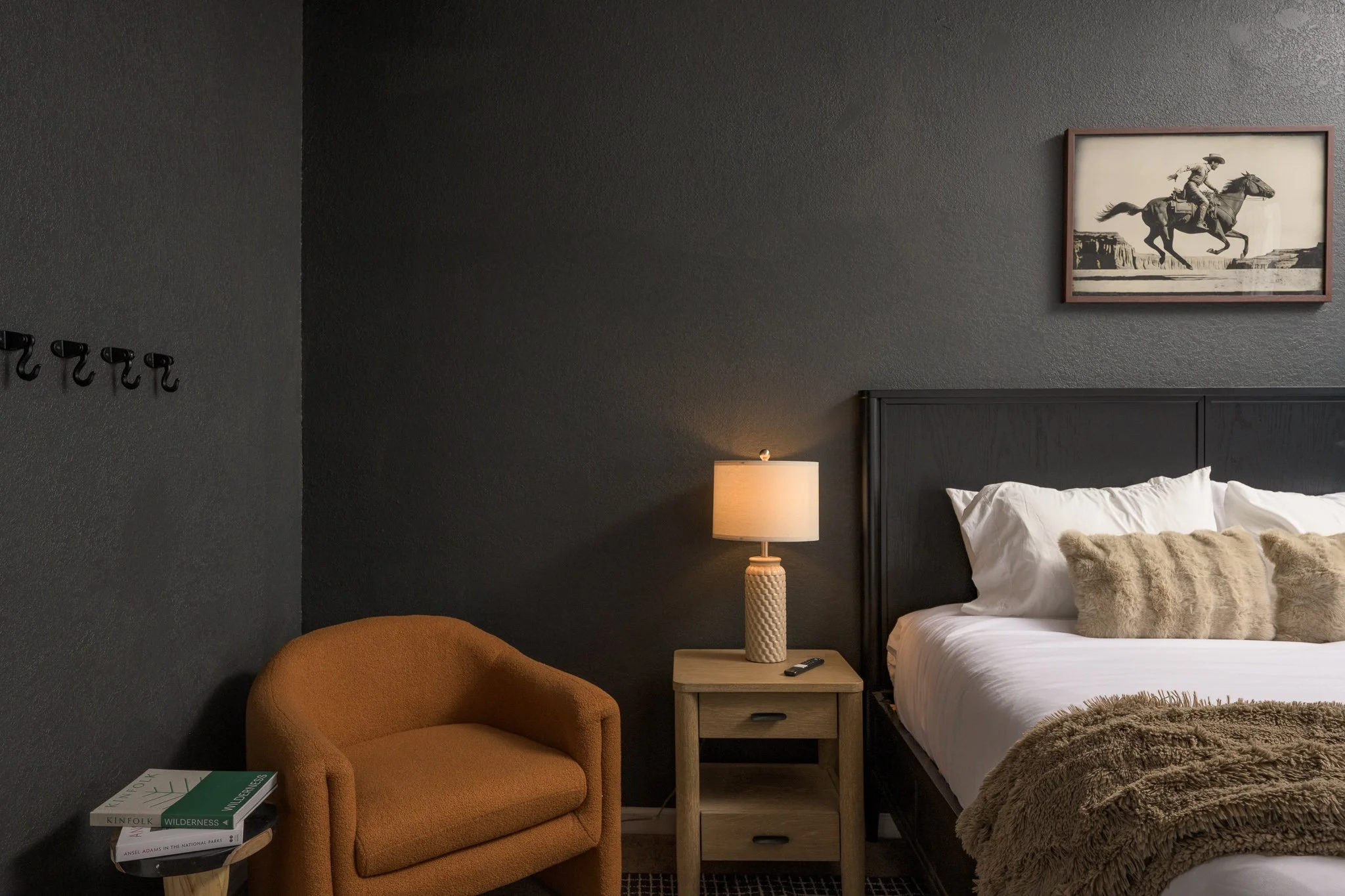
The bedrooms are where style has to share the spotlight with sleep. Prioritize a comfortable mattress, protective bedding layers, reachable lighting, useful window coverings, charging access, luggage space, and somewhere to hang clothes. Shared beds should have a landing surface on both sides when space allows.
Airbnb’s host guidance also emphasizes linens for every bed, a pillow for each guest, bedside lighting, and space for clothing and luggage. One more test from us: open every door and drawer. If the nightstand blocks the closet, the plan is not finished.
The bathrooms need more hooks than you think. Count the towels, then count the places to hang them. Add a washable bath mat, a landing spot for toiletries, good mirror lighting, organized backup storage, and a plunger nobody has to message the host to locate. Leave some empty surface area for the guests’ things.
The kitchen works better in small zones. Keep coffee with the mugs, cooking tools near the prep area, food storage together, and serving pieces where someone can find them without opening every cabinet. Stock dishes, glasses, and utensils for the full guest count—plus a sensible buffer for the mug that inevitably wanders onto the porch.
The outdoor space is still part of the stay. Think about sun, rain, cushion storage, drainage, evening lighting, the actual ground beneath each chair, and the path back inside. If guests will carry dinner outside, give dinner somewhere to land.
Spend Where Guests Feel It
Put the stronger part of the budget toward sleep quality, primary seating, dining chairs, window coverings, useful lighting, and outdoor pieces that have a genuinely hard job.
Save on small decorative objects, fast trends, and styling pieces whose only contribution is giving the cleaner one more thing to move.
Spend according to impact—not according to which product photograph seduced you first.
Before committing to a major piece, ask whether it can be cleaned during a real turnover, repaired if its most vulnerable part fails, carried through the actual doorway, and replaced without derailing a booking. In family-friendly properties, safety belongs in the furniture plan too; the U.S. Consumer Product Safety Commission recommends anchoring furniture and televisions to help prevent tip-over injuries. Follow manufacturer instructions and applicable local requirements.
The Small Things That Become Big Things
The purchases people remember late are rarely glamorous: bedside lamps, hangers, wastebaskets, useful mirrors, luggage racks, coasters, reading lights, shower hooks, spare blankets, mattress protectors, and enough charging access for the whole group.
They are also the things guests reach for without thinking.
Before launch, walk the house at night. Bring in a suitcase. Charge a phone. Make dinner. Take a shower. Sit in every lounge chair. Make coffee before turning on all the lights.
Airbnb recommends spending a night in the space—or having someone else do it—because daily use exposes what photographs miss. Keep one running list while you test. Do not fix things as you go, or half the awkward moments will vanish from memory.
Then solve the friction that repeats.
Try This at Your Property
Pick one room and remove everything whose only purpose is “we already owned it.”
Add back the pieces that support comfort, function, capacity, or the property’s story. Stop when the room feels complete—not full.
That one exercise can improve the photographs, simplify cleaning, and give guests more room to live.
Want Help Getting From Empty Rooms to Guest-Ready?
FoundHomeCo. helps short-term rental owners and investors create intentional interiors, organize approved product selections, and manage the ordering process.
Explore our services, browse Curated by FoundHomeCo., or schedule a Design Strategy Call.